Vila Real (Portugal), Universidade de Trás-os-Montes e Alto Douro (UTAD)
June 15, 16, 17 and 18, 2027
INTRODUCTION
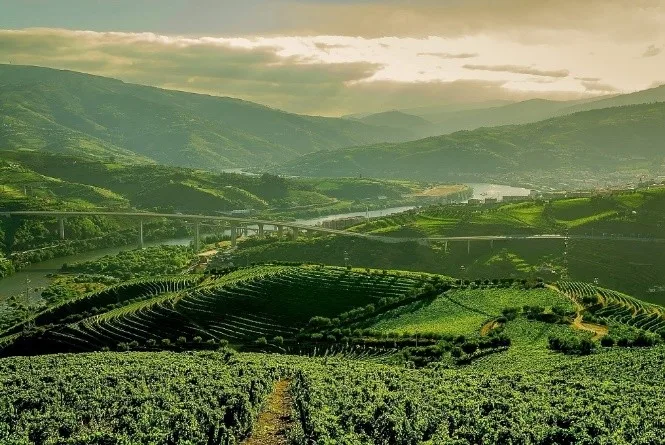
UTAD (University of Trás-os-Montes and Alto Douro) – the public university in the northern interior of Portugal – will host the 6th International Congress on Sociology and Anthropology of Tourism, which will take place in Vila Real (Trás-os-Montes and Alto Douro, Portugal) from June 15 to 18, 2027. This meeting will bring together 200 participants from around the world, especially from Ibero-America (Spain, Portugal, Latin America, etc.), to discuss aspects related to tourism from the perspectives of anthropology and sociology, in dialogue with other disciplines and areas of knowledge. The congress allows participants to strengthen and expand the SOCANTUR network and provides students and young researchers with the opportunity to present and discuss their work with more experienced researchers. The congress also serves as a platform to introduce participants to the interior of northern Portugal and thus enhance its tourism potential. Papers and communications can be submitted and presented in any Ibero-American language (Portuguese, Spanish, Catalan, Galician, Basque, Quechua, etc.), including indigenous or native languages (provided that a brief translation into Portuguese, Spanish or English is included), and in English.
GUIDELINES FOR SUBMITTING PAPERS
Extended abstracts of the paper may be submitted with the characteristics outlined below. Abstracts may only be submitted to one of the working groups listed below. The maximum number of abstracts is two (2). The working groups to which abstracts may be submitted are:
Group 1: Tourism, Governance, and Local Development
Group 2: Tourism, Sport, and Events
Group 3: Tourism and Gender
Group 4: Religious and Spiritual Tourism
Group 5: Tourism, Work, and Training
Group 6: Tourism, Gastronomy, and Wine
Group 7: Theory and Methodology of Research Applied to Tourism
Group 8: Tourism and Cultural Heritage
Group 9: Tourism in Urban Contexts
Group 10: Tourism and the Environment
Group 11: Tourism in Rural Contexts
Group 12: Representations, Imaginaries, and Images of Tourism.
Group 13: Seminar for Master’s and Doctoral Students in Tourism.
1. Authors and Submission of Abstracts
If there are two or more authors, the corresponding author is the one who signs the abstract first and submits the article by sending the communication by email to: socantur2027@utad.pt
Each author may submit a maximum of two articles. Extended abstracts will be evaluated by anonymous peers, and authors will be notified of the evaluation results.
2. Extended Abstracts
The extended abstract of the communication should be a text of between 800 and 1500 words, including the selected bibliography, footnotes and any other information that is considered necessary (e.g., research funding agencies). The information that must be included in the extended abstracts is as follows:
- Working group:
- Title of the presentation:
- Brief abstract:
- 5 keywords:
- Author’s name and surname:
- Author’s institutional affiliation:
- Author’s email address:
- Introduction to the text
- Presentation of the topic, subject, problem, and research objectives
- Summary of the theoretical proposal
- Methodology used
- Type of analysis, results, contributions, and conclusions
- Bibliographic references in APA 7th edition format (see: https://normas-apa.org/wp-content/uploads/Guia-Normas-APA-7ma-edicion.pdf ) :
- Acknowledgments
Adopting a principle of respect and recognition of cultural and linguistic diversity, submissions to the VI SOCANTUR may be written in any of the official languages recognized in Ibero-America or in English, with preference given to Spanish and Portuguese. These two languages are the most widely used in the Ibero-American region and are spoken by more than 800 million people.
3. Acceptance and Evaluation of Extended Abstracts
The extended abstracts received are evaluated by the Working Group Coordination, with input from the Scientific Committee. Notification of acceptance or rejection of the presentation proposals (extended abstracts) will be sent to the corresponding author. All presentations are credited as “presentations” in both the final program publication and the certificate issued to participants.
4. Publication Opportunities
The best presentations from the conference may be selected for:
- Publication of an article in a forthcoming special volume of the International Journal of Tourism Anthropology (see: https://www.inderscience.com/jhome.php?jcode=ijta )
b) Publication of a chapter in a book published by Emerald Group (UK) in the series edited by Prof. Dr. Maximiliano E. Korstanje (University of Palermo, Argentina). Link to the series:
SCIENTIFIC JOURNALS THAT SUPPORT THE CONGRESS
KEY DATES
- December 18, 2025: Call for papers
- September 30, 2026: Deadline for submission of papers.
- April – November 2026: Evaluation of papers.
- December 31, 2026: Notification of acceptance or rejection of papers.
- January 1, 2027: Registration period opens (payment to UTAD).
- February 28, 2027: Deadline for registration at reduced rate.
- March 31, 2027: Publication of the Congress Program.
- May 31, 2027: Deadline for registration at the general rate.
- May 31, 2027: Publication of the detailed program.
- June 15-18, 2027: VI SOCANTUR Congress held at UTAD in Vila Real, Portugal.
Questions, doubts or clarifications: socantur2027@utad.pt
WORKING GROUPS OF THE VI SOCANTUR CONGRESS 2027
Group 1: Tourism, Governance, and Local Development
“Tourism is an economic, social, and cultural activity that has a significant impact on the development of territories. This entails a series of challenges, such as environmental preservation, the inclusion of local communities, adaptation to new traveler demands, and competition among destinations.”
Coordination:
Ana Goytia (University of Deusto): agoytia@deusto.es
Montserrat Crespi (University of Barcelona): mcrespi@ub.edu
Group 2: Tourism, Sport, and Events
“Tourism, sport, and events converge spatially and temporally in many aspects of contemporary society. In this sense, research allows us to establish theoretical and methodological foundations that enable rigorous and comprehensive analyses.”
Coordination:
Rocío Blanco (University of Extremadura): rblanco@unex.es
Diego Santos González (EAE Business School): dsantos@eae.es
Group 3: Tourism and Gender
“Tourism research has demonstrated a growing interest in applying a gender perspective. Notable differences between men and women are evident in all areas, often placing women at a disadvantage. We are issuing a call for participation in this group with the aim of bringing together researchers working on these topics.”
Coordination:
Mónica Segovia (Rey Juan Carlos University): monica.segovia@urjc.es
Fátima Gómez (European University of Valencia): fatima.gomez@universidadeuropea.es
Pau Pérez Ledo (University of Valencia): Pau.perez-ledo@uv.es
Group 4: Religious and Spiritual Tourism
“Religious tourism, historically linked to sanctuaries, temples, and institutionalized places of worship, is now intertwined with spiritual tourism, which transcends traditional religious motivations and is consolidating itself as a pluralistic field, articulating pilgrimage practices, contemplative retreats, heritage tours with sacred roots, and new forms of secularized spirituality. The group constitutes an interdisciplinary space for discussing how sacralized territories — from historical sanctuaries to contemporary symbolic landscapes — shape tourist imaginaries, narratives, and practices.”
Coordination:
Mª Victoria Sanagustín-Fons (University of Zaragoza): vitico@unizar.es
Iria Caamaño Franco (University of A Coruña): iria.caamano@udc.es
Group 5: Tourism, Work, and Training
“The relationship between work and tourism is fraught with controversy. On the one hand, the tourism sector’s capacity to create jobs, especially for the most vulnerable groups in the labor market, such as migrants, young people, and women, has always been highlighted as a positive factor.”
Coordination:
Edgar Bernardo (Instituto Superior de Ciências Educativas – Centro em Rede de Investigação em Antropologia): edgarbernardoutad@gmail.com
Group 6: Tourism, Gastronomy, and Wines
“From the field of tourism studies, gastronomy has been analyzed for decades as a fundamental component of travel (Bessiere, 1998). Considering that food represents approximately one-third of all tourist expenditure (Hall and Sharples, 2003), gastronomic tourism and wine tourism are growing sectors within the tourism market (Antonioli Corigliano, 2002, Dixit, 2022) and, in connection with cultural and heritage tourism, continue to grow in a context of hypermodern globalization in which the objective of consumption has shifted from the functional to the experiential.”
Coordination:
Xavier Medina (Open University of Catalonia): fxmedina@gmail.com
María del Pilar Leal Londoño (CETT Barcelona School of Tourism, Hospitality & Gastronomy, University of Barcelona): mpilar.leal@cett.cat
José Antonio Vázquez Medina (Center for Research in Food and Development – CIAD, Mexico): jose_antoniov@hotmail.com
Group 7: Theory and Methodology of Research Applied to Tourism
“In this working group, we analyze whether research conducted under the label Socio-Anthropology of Tourism has a distinctive epistemological entity; that is, whether it has an unequivocally defined object of study and a concrete theoretical framework, or whether, on the contrary, it lacks these and resorts to social theory for understanding.”
Coordination:
Raúl Travé (Complutense University of Madrid): rtrave@ucm.es
José Palacios Ramírez (Miguel Hernández University): j.palacios@umh.es
Fátima Santos-Izquierdo Bueno (University of Málaga): fatimasantos@uma.es
Group 8: Tourism and Cultural Heritage
“The main objective of this symposium is to present empirical references that allow for collective reflection on the variability of situations arising from the complex equation of Tourism and Heritage.”
Coordination:
Daniel Carmona Zubiri (Miguel Hernández University): dcarmona@umh.es
Javier Hernández Ramírez (University of Seville): jhernan@us.es
Saida Palou Rubio (University of Girona): saida.palou@udg.edu
Group 9: Tourism in Urban Contexts
“Based on a critical analysis of neoliberal urban planning and an exploration of the dynamics of the touristification of everyday life, this working group aims to share case studies, methodological approaches, and theoretical perspectives from anthropology and sociology that address the transformations that tourism has produced in different urban contexts.”
Coordination:
Claudio Milano (University of Barcelona): claudiomilano@ub.edu
Jorge Sequera (National University of Distance Education): jorgesequera@poli.uned.es
Group 10: Tourism and the Environment
“This group invites a socio-anthropological reflection on the relationship between tourism and the environment. The approaches are multiple: from evaluating the bidirectional impacts between tourism and the environment; to presenting management formulas or investigating the cultural meanings that legitimize and support the different proposals for the interrelation of this pairing.”
Coordination:
Pablo Díaz Rodríguez (University of La Laguna): padiaz@ull.es
Paula Jiménez Caballero (University of Zaragoza): paulajcaballero@gmail.com
Group 11: Tourism in Rural Contexts
“Tourism has become a practically structural activity for the rural world, both in the Global North and South. There is no rural environment that tourism has not penetrated to a greater or lesser extent, becoming one of the strategic elements for understanding the dynamics of these contexts.”
Coordination:
Esteban Ruíz Ballesteros (Pablo de Olavide University): eruibal@upo.es
Rebeca Osorio González (Autonomous University of the State of Mexico): rosoriog@uaemex.mex
Group 12: Representations, Imaginaries, and Images of Tourism
“The image is a fundamental component of the tourism system, fulfilling a primary mediating function in the interrelation of tourists’ motivations and desires with the characteristics of the destination. Therefore, we call for the presentation of papers that reflect on images and brands in tourism.”
Coordination:
Ana Gómez Leiras (Galician Higher School of Hospitality): analeiras@cshg.es
Alberto J. Rodríguez Darias (University of La Laguna): ajroddar@ull.edu.es
Group 13: Seminar for Master’s and Doctoral Students in Tourism
“The main objective of the seminar is to create a space for dialogue and synergy among doctoral students, allowing them to share and discuss their research. The seminar will be structured around one or more tables, composed of doctoral students with similar research areas. A doctoral student will act as a moderator at each table, facilitating the flow of discussions without the presence of supervisors. This fosters natural interaction among the doctoral students, an atmosphere of trust, and the generation of new ideas that will benefit their research.”
Coordination:
Lorena I. Márquez González (University of La Laguna): lorenamarquezgonzalez3@gmail.com
SCIENTIFIC COMMITTEE OF THE 6TH SOCANTUR
Chair:
• Alejandro Mantecón (University of Alicante, President of the Sociology Section of SOCANTUR).
• Antonio Miguel Nogués (Miguel Hernández University, President of the Social Anthropology Section of SOCANTUR).
Members in alphabetical order
| Agustín Santana Talavera (Universidad de La Laguna) |
| Antón Álvarez Sousa (Universidade da Coruña) |
| Beatriz Santamarina Campos (Universitat de València) |
| Camila Olga del Mármol Cartañá (Universitat de Barcelona) |
| Fabio Corbisiero (Università degli Studi di Napoli Federico II) |
| Filipa Fernandes (Universidade de Lisboa) |
| Graça Joaquim (Escola Superior de Hotelaria e Turismo do Estoril) |
| Inmaculada Cristina Puertas Cañaveral (Universidad de Granada) |
| João Filipe de Jesús Marques (Universidade do Algarve) |
| Jordi Gascón Gutiérrez (Universitat de Barcelona) |
| José Luis Paniza Prados (Universidad de Granada) |
| Julia Elena Fraga Berdugo (CINVESTAV México) |
| Li Cheng (Sichuan University) |
| Luís Silva (investigador independiente) |
| Maria Cardeira da Silva (Universidade Nova de Lisboa – CRIA) |
| María del Pilar Espeso-Molinero (Universidad de Alicante) |
| María José Andrade (Universidade da Coruña) |
| Marta Lalanda Prista (Universidade Nova de Lisboa – CRIA) |
| Maribel Osorio García (Universidad Autónoma del Estado de México) |
| Maximiliano Korstanje (Universidad de Palermo, Argentina) |
| Mónica Beatriz Lacarrieu (Universidad de Buenos Aires) |
| Natália Azevedo (Universidade do Porto) |
| Noel Salazar (KU Leuven) |
| Norma Josefina Fuller Osores (Pontifica Universidad Católica del Perú) |
| Pablo Rodríguez González (Universidad de La Laguna) |
| Raquel Huete Nieves (Universidad de Alicante) |
| Raoul Bianchi (The Manchester Metropolitan University) |
| Rodrigo Grunewald (Universidade Federal de Campina Grande) |
| Roque Pinto (Universidade Estadual de Santa Cruz) |
| Tullio Romita (Universitá della Calabria) |
LOCAL ORGANIZATION COMMISSION IN UTAD
Alexandre Guedes, Carla Gonçalves, Humberto Martins, Nieves Losada, Octávio Sacramento, Paulo Mendes, Pedro Silva, Vera Mendonça, Veronique Joukes y Xerardo Pereiro (coordination).
WITH THE SUPPORT OF
REGISTRATION FEES
• General with scientific communication: €150 (until February 28, 2027); after February 28, 2027: €200.
• General without scientific communication: €100 (until February 28, 2027); after February 28, 2027: €150.
• Students and Unemployed: €40 (until February 28, 2027). After February 28, 2027: €60.
MODEL FOR SUBMITTING COMMUNICATIONS
(EXTENDED ABSTRACT with a maximum limit of 1500 words)
• Working Group:
Presentation Title:
Brief Abstract:
5 Keywords:
Author’s First and Last Name:
Author’s Institutional Affiliation:
Author’s Email Address:
Introduction to the Text
Presentation of the Theme, Subject, Problem, and Objectives of the Research
Summary of the Theoretical Proposal
Methodology Used
Type of Analysis, Results, Contributions, and Conclusions
Bibliographic References in APA 7th Edition format (see: https://normas-apa.org/wp-content/uploads/Guia-Normas-APA-7ma-edicion.pdf ):
SEND TO: socantur2027@utad.pt
Acknowledgements

This work is supported by national funds, through the FCT – Portuguese Foundation for Science and Technology under the project UIDB/04011/2025 (https://doi.org/10.54499/UID/04011/2025)

This work is supported by national funds, through the FCT – Portuguese Foundation for Science and Technology under the project UID/04038/2025 (https://doi.org/10.54499/UID/04038/2025)